Sample Classification Guide
Types: Recognise the Building Blocks
When you open an unfamiliar folder of WAV or AIFF files, the quickest way to orient yourself is by structural behaviour. Before you ask whether a sound feels vintage or modern, listen to how it unfolds across time: does it strike once and vanish, cycle on a musical grid, or drift without a pulse?
Below we break down the five foundational audio sample types you will encounter in real-world packs and field recordings, complete with listening cues and edge-case solutions.
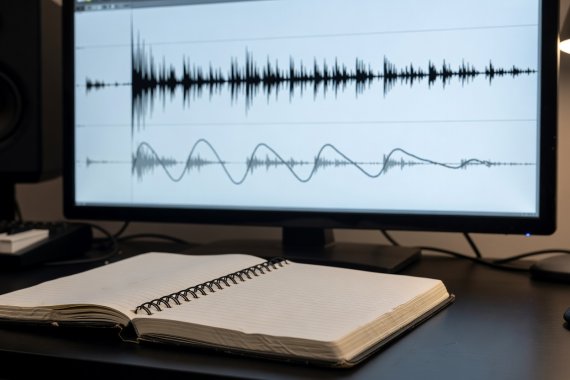
Snare_Rim_Dry.wav (0.4s)
Bottom Track: Guitar_Chords_90bpm_Em.wav (10.6s)
1. One-Shots: The Atomic Events
A one-shot is a single acoustic or electronic event captured from its initial transient through to silence. Because it carries no internal tempo grid, a one-shot can be dropped onto any beat of any bar or loaded into a sampler instrument (such as an MPC pad bank, Ableton Simpler, or Logic Quick Sampler) to be played chromatically.
Percussive One-Shots
Kicks, snares, claps, hi-hat ticks, woodblocks, and hand percussion. Listen closely to the tail: a snare recorded in a tiled stairwell carries a 600 ms reverb tail that may clash with a tight dry funk groove unless you apply a fade-out envelope.
Label Example: Kick_SubPunch_Short.wav
Tonal & Stab One-Shots
Single bass plucks, synth brass stabs, piano chords struck once, or guitar harmonics. Always verify the fundamental pitch of tonal one-shots. Many classic house chord stabs are actually minor seventh or ninth chords sampled onto a single pad; note the chord quality alongside the root note.
Label Example: Stab_Rhodes_Min7_C.wav
2. Rhythmic, Melodic, and Full-Mix Loops
A loop is a performance phrase trimmed to an exact bar length so that when repeated end-to-end, the musical pulse never stumbles. Sorting all loops into one giant bucket quickly creates friction; dividing them into three functional sub-types keeps your session moving.
Top Loops & Full Drum Loops
Full drum loops include kick, snare, and hi-hats together. Top loops intentionally omit the kick drum, leaving only shakers, hats, tambourines, and ghost percussion so you can program your own kick pattern underneath without low-end phase cancellation.
Melodic & Harmonic Phrases
Single-line leads, bass grooves, and multi-chord keyboard progressions. Pay attention to whether the final chord resolves back to the tonic on bar one or leaves a reverb tail hanging over the loop seam.
Construction Stems & Combi Loops
Many sample creators include a "Full Mix" demonstration loop alongside the isolated instrument stems that built it. Tag full-mix demos clearly as Combi or Full-Stem-Mix so you don't accidentally mistake a crowded four-instrument bounce for a solo keyboard part.
3. Beds, Foley, Multisamples, and Vocal Cuts
Not every useful audio file fits neatly into the one-shot versus loop binary. As your library matures, give dedicated shelf space to these three specialised forms:
| Sample Category | Audible Behaviour | Duration Range | Primary Sorting Priority |
|---|---|---|---|
| Atmospheric Beds & Drones | Continuous harmonic pad or environmental recording (rain, room tone, tape hiss) without bar lines. | 8 sec – 2 min | Mood, stereo width, and whether a root pitch is present. |
| Transition FX & Risers | Directional movement building toward or exploding from a downbeat (sweeps, reverse pianos, impacts). | 1 sec – 8 sec | Riser length in beats (if tempo-synced) or bright vs. dark impact weight. |
| Vocal Phrases & Ad-Libs | Spoken word snippets, sung hooks, breaths, and choir swells. | 0.5 sec – 16 sec | Dry vs. wet processing, syllable rhythm, and scale mode. |
| Instrument Multisamples | A matched folder of single notes recorded every 1–3 semitones across a keyboard at multiple velocities. | 2 sec – 6 sec per note | Keep grouped inside a single parent instrument folder; never scatter into general one-shots. |
Ready to describe the character of these building blocks? Continue to Tags: Describe What You Hear.